
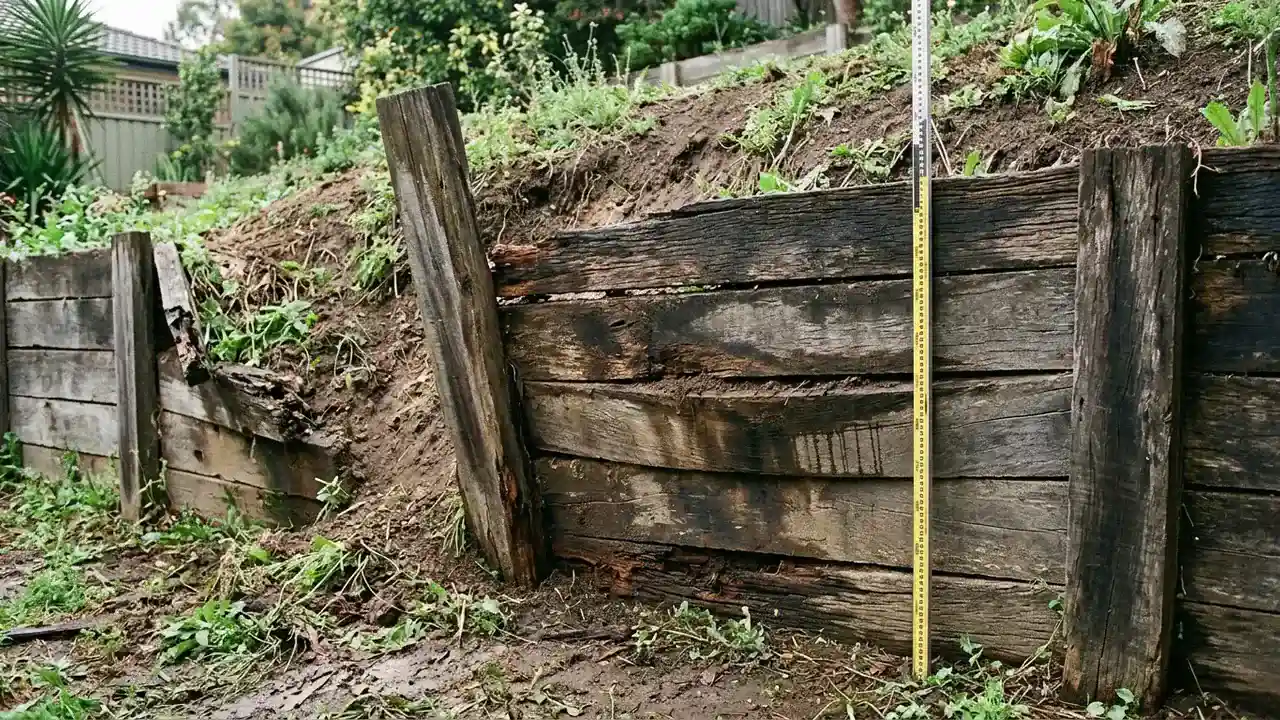
Retaining wall service guide
Retaining Wall Repairs & Replacement
Leaning, bulging, cracking, timber decay, washout and water staining are observations, not a remote diagnosis. A useful assessment considers the wall, retained load, drainage, access and what has changed over time.
When retaining wall repairs & replacement may fit
- ✓Existing walls showing movement or material deterioration
- ✓Projects comparing local repair with full replacement
- ✓Owners documenting a wall before requesting an assessment
What a retaining wall repairs & replacement scope should address
Scope watch
Do not rely on a photo-only declaration that a wall is safe, repairable or beyond repair. Restrict access and seek prompt qualified advice where movement or collapse risk is active.
Planning retaining wall repairs & replacement from scope to handover
Define the project
Start with a safe record of the wall and its surroundings. Photograph the full length, visible lean or bulges, cracks, failed joints, decayed timber, exposed posts, washout and drainage outlets. Note recent rain, excavation, tree removal, plumbing changes or new loads above the wall, and avoid entering an area where collapse appears possible.
Test the site assumptions
The assessment should distinguish a damaged component from a failing system. Replacing a sleeper, repointing masonry or adding an outlet may be reasonable only when the foundation, posts, retained load and remaining wall can support that intervention. Ask what evidence supports repair and what conditions would instead trigger partial or complete replacement.
Compare the written scope
Repair access and temporary stability can drive the method. Removing retained soil or failed components may expose neighbouring sections and nearby property. The written scope should address safe sequencing, temporary support where required, protection of services and structures, spoil handling and how the retained ground will be restored.
Confirm the handover
Use comparable scopes when weighing repair against replacement. Include investigation, design, approvals, demolition, drainage, disposal, new work and reinstatement in both options. Also ask what warranty or limitation applies to retained old components so a seemingly cheaper repair is not mistaken for a new-wall outcome.
Final comparison check for retaining wall repairs & replacement
Before accepting a proposal, ask each provider to respond to the same project brief and state the assumptions behind the price. For retaining wall repairs & replacement, focus first on condition and movement history and how the provider will handle retained loads and nearby structures. Raise this practical question during the site visit: Has the movement changed recently? Record who owns unresolved investigation, design, authority contact and inspection. Then compare the completed outcome rather than isolated material rates. If one proposal excludes a task that another includes, place that difference beside the total so it is not mistaken for a saving.
Retaining Wall Repairs & Replacement across Australia
See where retaining wall repairs & replacement enquiries are accepted, then open the local guide for authority links and site questions. Availability varies by location and project requirements.
Frequently Asked Questions
What supports the soil while an old retaining wall is replaced?
Can a retaining wall be repaired instead of replaced?
What are signs a retaining wall needs assessment?
Does every retaining wall need drainage?
What is a gabion retaining wall?
Prepare your project
Need to scope retaining wall repairs & replacement?
Describe what you know about the retaining wall repairs & replacement site, dimensions and constraints. Retaining Wall Pros will review the details and identify the most useful next step; provider availability is not guaranteed.